

Key Business Use Cases
- Internal Payouts: Real-time account balance reallocation between internal departments or sub-merchants.
- B2B Transfers: Direct merchant-to-merchant payouts across different organizations operating on OneKhusa.
- External Payouts: Automated payout processing to customer bank accounts or mobile money wallets (e.g., payroll, vendor payments, platform withdrawals).
Supported Transfer Types
OneKhusa categorizes single disbursements into three distinct transfer channels based on the target beneficiary destination:| Transfer Type | Beneficiary Target | Description | Typical Speed |
|---|---|---|---|
| Intra-Organization | Sub-merchant or merchant account within the same organization | Funds are transferred from one merchant account to another merchant account within the same organisation on OneKhusa | Instant |
| Inter-Organization | Merchant account belonging to a different OneKhusa organization | Funds are transferred from one merchant account to another merchant account registered on OneKhusa but belonging to a different organisation | Instant |
| External Transfer | External Bank Account or Mobile Money Wallet | Funds are transferred from one merchant account to an external bank account or mobile wallet through the payment bridge | Real-time to Near Instant |
How Disbursements Work (Execution Flow)
-
Authentication: Obtain a bearer token via the
POST /api-reference/get-started/getAccessTokenendpoint. - Initiate Transfer: Submit a payout payload specifying the source merchant account, amount, and beneficiary details matching the transfer route.
-
Processing & Status:
- Internal transfers execute synchronously with immediate balance updates.
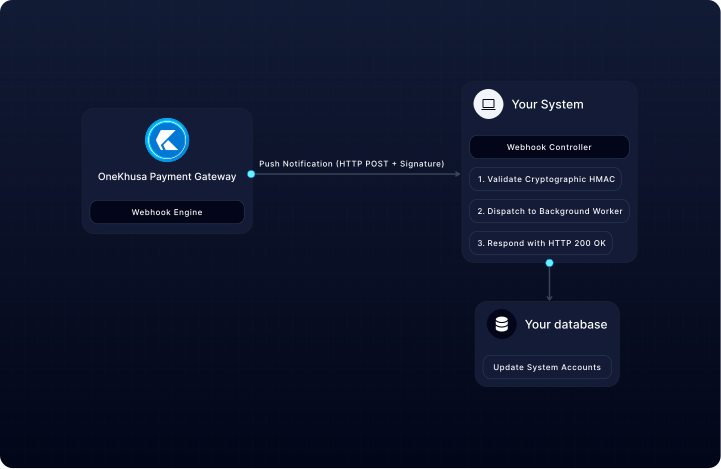
- External transfers to banks or mobile money networks process asynchronously via the payment bridge, updating status asynchronously via webhooks.
Developer Best Practices & Operational Safeguards
-
Idempotency Keys: Always supply a unique
idempotency-keyin your request headers for disbursement requests to prevent duplicate payouts caused by transient network timeouts. -
Account Balance Checks: Ensure your merchant account maintains sufficient cleared (available) funds prior to initiating disbursements; overdraft transfers will be rejected automatically (
400 Insufficient funds). -
Webhook Handling: Implement webhook listeners to receive final execution states (
SUCCESS,FAILED,REVERSED) for external payouts.